
Book Appointment Now- 9112297799 | Emergency Contact No - 7798447799

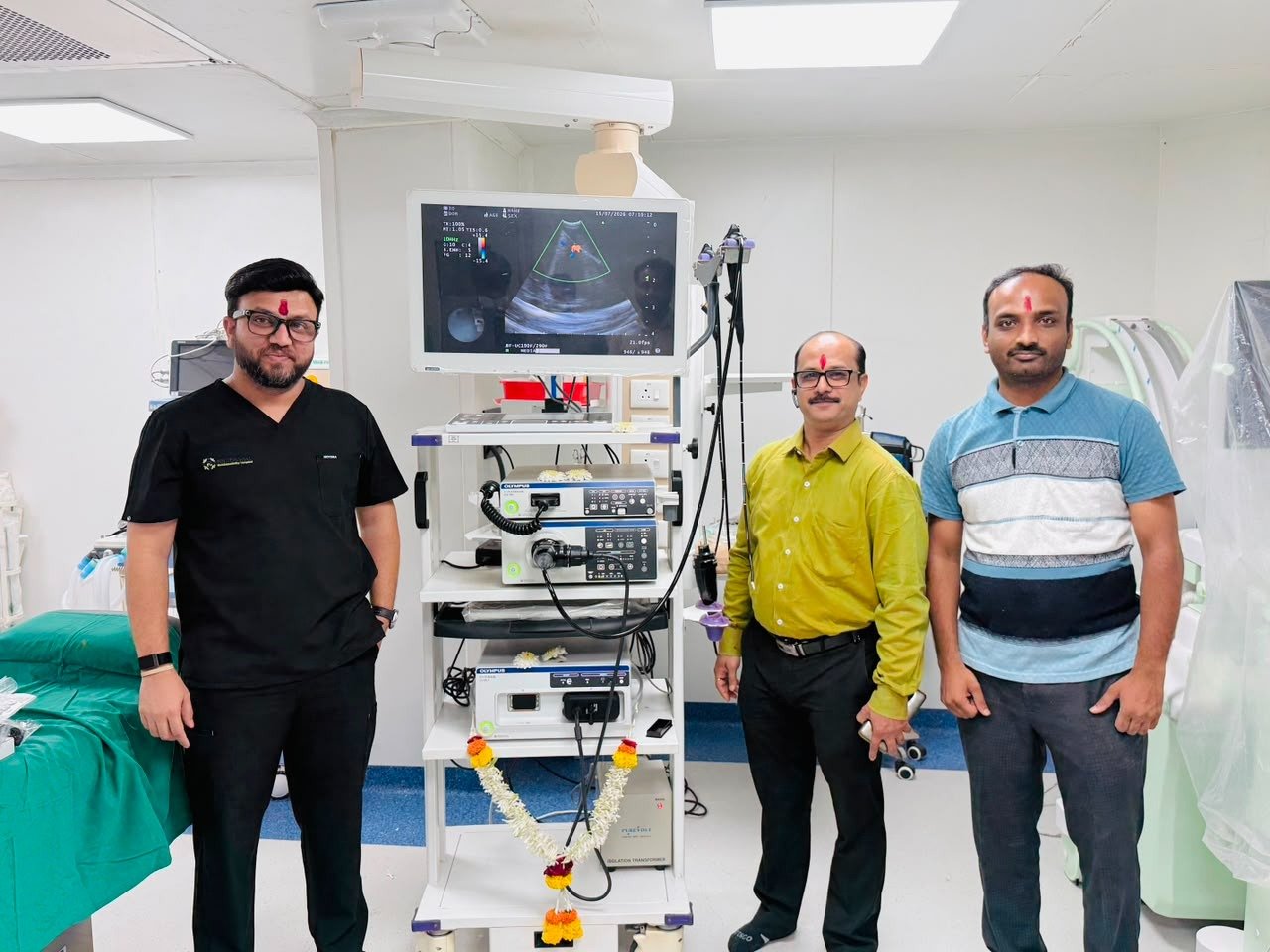
EBUS (Endobronchial Ultrasound) is now available at Breathewell Hospital.
EBUS (Endobronchial Ultrasound) is now available at BreatheWell Hospital.
Patients who have been advised to undergo EBUS for the evaluation of enlarged chest lymph nodes, suspicious lung lesions, suspected lung cancer, sarcoidosis, or certain other chest conditions can now access this procedure at BreatheWell under specialist respiratory care.
EBUS is a minimally invasive diagnostic procedure that combines bronchoscopy with ultrasound technology. It helps doctors examine structures around the airways and, when required, collect tissue samples for laboratory testing.
What is EBUS?
EBUS stands for Endobronchial Ultrasound. It is a procedure that uses a thin, flexible bronchoscope fitted with a camera and a small ultrasound probe at its tip. The bronchoscope is passed through the mouth into the airways, allowing the doctor to view lymph nodes around the airways, structures inside the chest, and certain suspicious areas near the major airways. If needed, the doctor can also collect a small tissue or cell sample using a fine needle. This procedure is known as EBUS-TBNA (Endobronchial Ultrasound-Guided Transbronchial Needle Aspiration). The collected sample is then sent to a laboratory for further examination.
Why Do Doctors Recommend EBUS?
Sometimes a CT scan, PET-CT, or another chest scan may show an enlarged lymph node, suspicious lesion, or other abnormality. Imaging can show that something is abnormal, but it may not always explain what is causing the change.
EBUS may be recommended to:
- Investigate enlarged lymph nodes inside the chest
- Obtain tissue for suspected lung cancer
- Help assess lymph-node involvement in lung cancer
- Investigate sarcoidosis
- Evaluate certain infections affecting chest lymph nodes
- Examine selected lesions close to the major airways
Important:
Enlarged lymph nodes do not automatically mean cancer. Infection, inflammation, and other conditions can also cause lymph-node enlargement.
At BreatheWell Hospital, EBUS is recommended only after evaluation by a qualified respiratory specialist.
How is EBUS Performed?
Before the procedure, the medical team reviews:
- Medical history
- Current medicines
- Allergies
- CT / PET-CT reports
- Heart and lung condition
- Relevant blood tests and investigations
During EBUS:
- The patient is positioned comfortably
- Local anaesthetic is usually used to numb the throat
- Sedation may be given to help the patient relax
- A flexible bronchoscope is gently passed into the airways
- Ultrasound is used to locate the required lymph node or lesion
- If needed, a fine needle is used to collect a sample
- The sample is sent to the laboratory for testing
The patient’s oxygen level and other vital signs are monitored throughout the procedure.
Key Benefits of EBUS
EBUS allows the doctor to see the target area using ultrasound while taking the sample.
It may help to :
- Obtain tissue needed for diagnosis
- Investigate enlarged lymph nodes
- Evaluate certain lung and chest conditions
- Help with lung cancer diagnosis and staging
- Support treatment planning
- Reduce the need for more invasive surgical sampling in selected patients
A major advantage is that bronchoscopy, ultrasound imaging, and tissue sampling can often be performed during the same procedure.
What Should Patients Do Before EBUS?
Patients should inform their doctor if they:
- Take blood-thinning medicines
- Take diabetes medicines
- Have heart problems
- Have breathing problems
- Have any known allergies
- Take regular prescription medicines
Some medicines may need to be adjusted before the procedure. Do not stop any prescribed medicine on your own. Always follow the instructions given by your treating doctor.
Patients undergoing EBUS at BreatheWell Hospital should follow the preparation instructions provided by the respiratory team.
EBUS Facility at Breathewell Hospital
EBUS is now available at BreatheWell Hospital for patients who require specialist evaluation of selected lung, airway, and chest lymph-node conditions.
If you have already been advised to undergo EBUS, you can consult the respiratory specialists at BreatheWell with your:
- CT Scan
- PET-CT Scan, if available
- Previous medical reports
- Blood test reports
- Current medicine list
- Previous biopsy or investigation reports, if available
The specialist will review your condition and explain whether EBUS is appropriate for you.
Consult the Respiratory Specialists at Breathewell
If your scan has shown an enlarged lymph node, suspicious lung lesion, or another chest abnormality, proper specialist evaluation is the first step.
If your doctor has recommended an Endobronchial Ultrasound (EBUS), the procedure is now available at BreatheWell Hospital.
Consult the respiratory specialists at BreatheWell to understand:
- Whether EBUS is suitable for your condition
- How to prepare for the procedure
- What to expect during and after EBUS
- What further evaluation may be required
EBUS is a diagnostic procedure. The decision to perform it should always be based on individual medical evaluation by a qualified respiratory specialist.
Disclaimer:
This information is provided for general awareness and educational purposes only. It does not replace individual medical advice, diagnosis, or treatment from a qualified healthcare professional.